Recent Issues I Newsletters I Petfood Forum I Subscribe to Magazine
  Sign In I  Sign Up
PetfoodIndustry.com

  • HOME
  • MARKET INFORMATION
  • NUTRITION
  • SAFETY
  • PRODUCTION
  • PACKAGING
  • TOP PETFOOD COMPANIES
  • News
  • Products
  • Petfood and Treats
  • Petfood-Connection.com
  • Industry Calendar
  • Buyer's Guide

  • ArticleMore Images (2)
      • Email this to a friend Email
      • Print Printer
        Friendly
      • Font size: Decrease Font Increase Font
      • Share:Share
      • Share:Share Close
        • FacebookFacebook
        • MySpaceMySpace
        • stumbleuponstumbleupon
        • deliciousdelicious
        • diggdigg
        • newsvinenewsvine
        • linkedinlinkedin

      Optimal pet nutrition: the ideal protein concept

      Studies in geriatric pets show the importance of balancing the diet and avoiding nutrient excesses

      By Karen Wedekind, PhD Release Date: Comments(0)

      More Images

      1101PEToptimal1

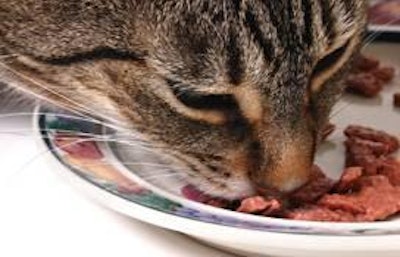
      In light of the advancing age of the pet population, optimal nutrition should aim to decrease the risks for disease and other age-related problems such as obesity, bone loss and lean muscle mass loss.

      The average age of dogs and cats continues to rise. Over the past 10 years in the US, there has been nearly a two-fold increase—from 24 to 47%—in the proportion of cats older than 6 years (Stratton-Phelps, 1999). Between one-third of dogs and one-half of cats are 7 years or older (Lund et al., 1999). According to the Morris Animal Foundation, the top three causes of death in both dogs and cats are renal, cancer and cardiovascular disease.

      In light of the advancing age of the pet population, optimal nutrition should aim to decrease the risks for these diseases and other age-related problems such as obesity, bone loss and lean muscle mass loss. Recent research in geriatric cats has demonstrated that by formulating to an optimal lysine:calorie ratio as well as to an ideal protein content, dietary protein could be lowered without causing lean muscle mass loss.

      Similar to pets, the top two leading causes of death in humans are cardiovascular disease and cancer, while renal disease ranks ninth (Xu et al., 2010). With people and pets, there is much debate concerning the detrimental effects of high-protein diets. These risks include renal disease, cancer, bone loss and increased kidney stones (DRI, 2005).

      Aging-associated loss of lean muscle mass in companion animals is a concern as it is in humans (Janssen et al., 2005; Laflamme, 2005). Reductions in muscle mass due to aging typically result in decreases in activity and general health. Loss of muscle is also often associated with other age-related diseases such as obesity, diabetes and osteoporosis (Janssen; Layman, 2009).

      The top three causes of death in both dogs and cats are renal, cancer and cardiovascular disease.

      Supplying an appropriate amount of the essential amino acids relative to lysine (protein quality) rather than protein quantity is required for the synthesis of new muscle protein and to reduce protein degradation (Baker et al., 1991; Frantz et al., 2007 ).

      1101PETnutrition_fig1.jpg

      A study by N.Z. Frantz and colleagues (2007) illustrates the importance of balancing a diet according to ideal amino acid profile as opposed to absolute protein amount. The trial involved 40 geriatric cats, 12 years or older. Cats were assigned to one of four diets (designated A-D) representing four US commercial petfood manufacturers. Blood samples were obtained at baseline, one and three months, and body composition was measured using dual energy x-ray absorptiometry at baseline and three months.

      As shown in Figure 1, diet D contained the highest protein and phosphorous (P) levels. Cats fed this diet had significantly higher bone loss as measured by bone mineral content (BMC), as well as higher blood urea nitrogen and creatinine compared to cats fed the other diets. Cats fed diet B also had higher creatinine compared to the groups on diets A and C.

      Reductions of both protein and P have been shown previously to delay the progression of renal disease (Elliot et al., 2000; Ross et al., 2006). As shown in Figures 1  and 2, there was a linear effect of dietary protein on bone loss: With increasing protein, BMC decreased. At protein concentrations of 26% or less, positive BMC was attained.  

      As shown in Figure 3, only cats fed diet B gained lean muscle, whereas the other cats lost (diets A and C) or maintained (diet D) lean muscle over the 90-day trial. The lean muscle loss was a linear function of the lysine:calorie ratio. Above approximately 500 mg lysine/100 kcal, positive lean was achieved. Diet B not only had the highest lysine:calorie ratio; it was the only diet of the four formulated to an ideal protein ratio.

      Reductions in muscle mass due to aging typically result in decreases in activity and general health.

      Loss of lean muscle mass is a serious concern among aging companion animals as well as during weight loss. In foods formulated for promoting weight loss, dietary protein is often increased to prevent the loss of lean muscle mass. However, formulating to an ideal protein content and optimal lysine:calorie ratio appears to be a more effective strategy to prevent or minimize lean muscle loss while decreasing risk of kidney disease and bone loss.


      More online! 

      Find full references for this article here.


      Learn online 

      Find out about other nutrients that can affect a balanced pet diet in Dr. Wedekind’s webinar, part of the new Petfood Industry eLearning portal.


      Karen Wedekind, PhD, is a research scientist in the Pet Nutrition Division of Novus International (www.novusint.com).
      Updated: Jan 13, 2011 This article appeared in Petfood Industry, January 2011. ©Copyright 2013, All Rights Reserved.


      1
      1
      1

      Related Content

      An error occurred while parsing EntityName. Line 1, position 153. -- at System.Xml.XmlTextReaderImpl.Throw(String res, String arg) at System.Xml.XmlTextReaderImpl.ParseEntityName() at System.Xml.XmlTextReaderImpl.ParseEntityReference() at System.Xml.XmlTextReaderImpl.Read() at System.Xml.XPath.XPathDocument.LoadFromReader(XmlReader reader, XmlSpace space) at System.Xml.Xsl.Runtime.XmlQueryContext.ConstructDocument(Object dataSource, String uriRelative, Uri uriResolved) at System.Xml.Xsl.Runtime.XmlQueryContext..ctor(XmlQueryRuntime runtime, Object defaultDataSource, XmlResolver dataSources, XsltArgumentList argList, WhitespaceRuleLookup wsRules) at System.Xml.Xsl.Runtime.XmlQueryRuntime..ctor(XmlQueryStaticData data, Object defaultDataSource, XmlResolver dataSources, XsltArgumentList argList, XmlSequenceWriter seqWrt) at System.Xml.Xsl.XmlILCommand.Execute(Object defaultDocument, XmlResolver dataSources, XsltArgumentList argumentList, XmlWriter writer) at System.Xml.Xsl.XslCompiledTransform.Transform(XmlReader input, XsltArgumentList arguments, XmlWriter results) at XsltTransform.TransformXML(String strXmlDoc, String strXslPath, XsltArgumentList iXsltArgs)
       

      Comments

      0 Comments

      Add Comment

      Text Only 2000 character limit

    1101PETnutrition_fig2.jpg

    1101PETnutrition_fig3.jpg

  •  
  • Create or Maintain an account

    • Sign Up
    • Edit Your Profile
    • Subscribe to Newsletters
    • RSS feeds
    • Why Register

    Custom Publications

    • Empyreal 75 Update
    • The Extru-Technician

    Digital Editions

    • Petfood Industry
  • Events

    • Petfood Forum
    • Petfood Workshop
    • Petfood Forum China
    • Petfood Forum Asia
    • Petfood Forum Europe
    • Webinars
  • Help and Information Center

    • Support
    • Petfood Industry Editorial Staff
    • Advertising Contacts
    • Media Guide
    • Article Reprints

    Newsletters

    • Petfood Industry e-News
    • Petfood Industry Nutrition News

    Digital Directories

    • Petfood Industry Reference and Buyer's Guide
  • Social Media

    • Petfood-Connection
    • Petfood-Connection Smart Phone App
    • Twitter
    • Facebook
    • YouTube

    Nutrition Courses

    • WATT eLearning
    • Customized Training

    WATT Corporate

    • About WATT
    • Corporate Contacts
  • © Watt Publishing Co., 2013 All Rights Reserved
  • |Sitemap

--- Thank you for your patience ----

If you have any issues logging in or any other need feel free to contact us.

loading