Recent Issues I Newsletters I Petfood Forum I Subscribe to Magazine
  Sign In I  Sign Up
PetfoodIndustry.com

  • HOME
  • MARKET INFORMATION
  • NUTRITION
  • SAFETY
  • PRODUCTION
  • PACKAGING
  • TOP PETFOOD COMPANIES
  • News
  • Products
  • Petfood and Treats
  • Petfood-Connection.com
  • Industry Calendar
  • Buyer's Guide

  • ArticleMore Images (3)
      • Email this to a friend Email
      • Print Printer
        Friendly
      • Font size: Decrease Font Increase Font
      • Share:Share
      • Share:Share Close
        • FacebookFacebook
        • MySpaceMySpace
        • stumbleuponstumbleupon
        • deliciousdelicious
        • diggdigg
        • newsvinenewsvine
        • linkedinlinkedin

      The protein problem: Ingredient shortages and alternative sources

      A look at novel protein sources in petfood and Marcel Blok's viewpoint on the ingredient shortages our industry is facing

      BY Jessica Taylor Release Date: Comments(0)

      More Images

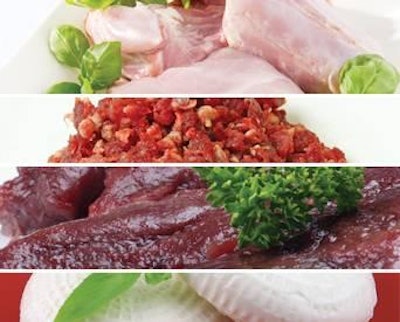
      novel-raw-proteins-1210PETprotein

      Szakaly, Utiwamoj, Elzbieta Sekowska, and greggr | BigStockPhoto.com

      Although protein can be derived from a plethora of sources—from kangaroo and krill to egg and milk products to pea protein concentrate—the standard of quality must always meet certain criteria to make it to a pet's bowl.

      Consumers of pet products are expressing an increasing want for high-quality ingredients and formulas for their companion animals. One of their main concerns? A focus on the protein source. What country did it come from? Is it organic or grass-fed? Is it animal or plant or something in between? According to Trevor Faber, MS, in his Petfood Forum presentation Methods to Evaluate Protein Quality Among Animal Protein Sources, our industry has responded by a movement away from rendered by-products, an increased focus on quality and novelty and the use of alternative, unusual protein sources.

      Although protein can be derived from a plethora of sources—from kangaroo and krill to egg and milk products to pea protein concentrate—the standard of quality must always meet certain standards, says Faber. These include:

      • Nitrogen and amino acid content
      • Digestibility
      • Bioavailability
      • Ability to aid growth, maintenance and repair of the body

      Faber also says alternative proteins can be evaluated for quality by looking at their composition, amino acid score, biological value (BV) and protein efficiency ratio, and through digestibility trials. So how do novel protein-formulated petfoods and treats on the market measure up to more common protein blends? Are they more sustainable, economical or healthful?

      Addiction-group-1210PETprotein

      Addiction Pet Foods prides themselves on being pioneers when it comes to the use of novel proteins in their dog and cat food formulas. Addiction makes a wild kangaroo dry dog food blend, as well as New Zealand brushtail and unagi (eel) wet cat foods.

      Addiction Pet Foods prides itself on being a pioneer when it comes to the use of novel proteins in their dog and cat food formulas. Addiction makes a wild kangaroo dry dog food blend, as well as New Zealand brushtail and unagi (eel) wet cat foods. Their protein sources are from New Zealand, Australia, the US and Canada, and are carefully chosen to ensure that products adhere to their eco-friendly philosophy.

      According to the company, kangaroo contains the highest levels of conjugated linoleic acid of any red meat. And because the kangaroo is harvested from the wild, it’s free from antibiotics and hormones and only contains 2% fat, making it ideal for a dog's diet. In 2011, Addiction introduced two cat foods using ingredients never used before in petfood formulas, claims the company. Brushtail is a non-indigenous marsupial that causes widespread damage to farmland and native habitats of New Zealand. It is also a great source of protein with a unique flavor and higher levels of Omega-3 fatty acids than any other meat. New Zealand brushtail is an ideal novel protein source for animals sensitive to chicken, beef and lamb. Unagi has high levels of Omega-3 fatty acids as well, and is balanced with seaweed for its rich antioxidant, vitamin, mineral and fiber, says the company.

      Another alternative (and sometimes controversial) novel protein popping up in pet treats and foods is raw goat's milk. According to Natural News, goat's milk has vitamins, minerals, trace elements, electrolytes, enzymes, proteins and fatty acids that are easily assimilated by an animal's body. Goat's milk does not contain the complex protein in cow's milk that stimulates allergic reactions, can also boost the immune system and alkalizes the digestive system, helping to increase the pH level in the blood stream.

      Additionally, says Natural News, raw goat's milk fights microbes, primarily due to the healthy medium-chained fatty acids it contains, such as capric and caprylic acids. It is very important to note that raw goat's milk is rich in selenium, a necessary bodily nutrient known for its immune-strengthening and antioxidant properties. Raw goat's milk may also be a good alternative for companion animals with sensitive digestive tracts.


      Ingredients: The strategic puzzle 

      BY Marcel Blok 

      It’s high time to get seriously worried about the main building block of our industry: ingredients, raw materials and/or commodities. Whichever terminology used, the clock is ticking and it’s already five minutes to 12. The time is more than due to stop lip-servicing the issue and start to do something tangible and sustainable to prepare ourselves for a different future. 

      Dramatic lows in harvests succeed one another with shorter intervals; which implies that there is less time to replenish strategic inventories. More money available on a global scale not only means that people can take better care of their pets, but also means that ingredients which were not in demand for human food until recently now start to become so. The consequence is that less animal by-products will be available for use in petfoods.

      The bigger, multinational companies are undoubtedly active in the field of searching for alternatives, but the vast majority of smaller operators simply do not have the funds to invest in any form of fundamental exploration. One might argue that if these companies would pool their funds, the money then available would most likely be sufficient to engage in such exploration. But this kind of cooperation seems to be a bridge too far for the industry; at least on the manufacturing side. So maybe there is a noble role to play for the ingredient suppliers. Because, after all, a sustainable petfood industry is in their best interest, as well. 

      Let’s look back at the times before the industry started to develop. Dog and cats were fed waste material such as table scraps or leftovers. Because it was gradually better understood that our pets need a more balanced diet, the industry started to develop and offer solutions. What we should now ask ourselves is whether or not human-grade material is required to feed our pets adequately, while providing them with a happy and healthy life. If one realizes that in some markets so-called economy petfoods are formulated according to human-grade standards but are sold at a price that is lower than piglet feed, the question seems valid. 

      Maybe we can go one step further back and use table waste again. If we realize that in the out-of-home eating industry at least 20% of what has been ordered is actually not eaten, we understand the amount of waste generated. But can this waste—consisting of human-grade protein, fat and carbohydrates—be recycled specifically for petfoods? To serve as a key ingredient or a base ingredient? Are there alternative carbohydrate sources that are now in short supply because they are uncommon, but which can be grown in much bigger quantities in their regions of origin? 

      It is clear that the time has come to redirect management focus from seeking efficiency improvement in production to seriously researching new opportunities in the procurement of alternative ingredients. Because ingredients are the basis of what we do: We prepare food!


      Good, better, best: How to evaluate your protein source

      Check out Dr. Trevor Faber’s Petfood Forum presentation, Methods to Evaluate Protein Quality Among Animal Protein Sources, to learn more about the use of alternative, unusual proteins in petfoods and the best ways to evaluate these sources.

      Updated: Sep 14, 2012 This article appeared in Petfood Industry, October 2012. ©Copyright 2013, All Rights Reserved.


      1
      1
      1

      Related Content

      Previous
      Next
      • pet food ingredients

      Carrageenan: for appearance's sake only?

      What is this quiet, unassuming ingredient, and should it be there?

      Broth: connecting food with feelings

      It's the finishing touch that can meet both owner and pet needs.

      Are chelated minerals worth it?

      The question is whether they provide additional benefit to the dog or cat

      More content about pet food ingredients
       

      Comments

      0 Comments

      Add Comment

      Text Only 2000 character limit

    Factors-affecting-protein-quality-1210PETprotein

    HappyDog-ostrich-dog-food-1210PETprotein

    The desire to feed pets novel ingredients is something consumers worldwide are expressing. This German petfood uses ostrich as its protein base.

    DalianSuncat-goat-milk-treat-1210PETprotein

    Another alternative (and sometimes controversial) novel protein popping up in pet treats and foods is raw goat's milk, which can be a good alternative for animals with senstive digestive tracts.

  •  
  • Create or Maintain an account

    • Sign Up
    • Edit Your Profile
    • Subscribe to Newsletters
    • RSS feeds
    • Why Register

    Custom Publications

    • Empyreal 75 Update
    • The Extru-Technician

    Digital Editions

    • Petfood Industry
  • Events

    • Petfood Forum
    • Petfood Workshop
    • Petfood Forum China
    • Petfood Forum Asia
    • Petfood Forum Europe
    • Webinars
  • Help and Information Center

    • Support
    • Petfood Industry Editorial Staff
    • Advertising Contacts
    • Media Guide
    • Article Reprints

    Newsletters

    • Petfood Industry e-News
    • Petfood Industry Nutrition News

    Digital Directories

    • Petfood Industry Reference and Buyer's Guide
  • Social Media

    • Petfood-Connection
    • Petfood-Connection Smart Phone App
    • Twitter
    • Facebook
    • YouTube

    Nutrition Courses

    • WATT eLearning
    • Customized Training

    WATT Corporate

    • About WATT
    • Corporate Contacts
  • © Watt Publishing Co., 2013 All Rights Reserved
  • |Sitemap

--- Thank you for your patience ----

If you have any issues logging in or any other need feel free to contact us.

loading