How human consumer trends reshape pet food marketing
Pet owners now apply the same values — nutrition, wellness and identity — to their animals that they apply to themselves, creating new opportunities.
June 3, 2026
Dogs and cats are now seen as family members, emotional support systems, workout buddies, travel companions and, in many homes, the most consistently well-liked member of the household.
Willee Cole | Bigstock.com
By Satoru Wakeshima, partner at CBX, and Jessica Scholl, design director at The J.M. Smucker Co.
Pets aren't people. But we shop for them like they are.
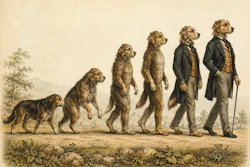
We've all heard the phrase "the humanization of pets." It's been a defining idea in the pet industry for years, helping describe how we think about pets as people — though today, that relationship has evolved into something more nuanced and meaningful. Pets aren't becoming more human. Humans are simply bringing more of their own values, rituals, anxieties, aspirations and shopping behaviors into the way they care for animals — and that distinction matters.
The American Pet Products Association reports that the pet care market is expected to reach $165 billion in 2026. This growth is fueled not just by rising ownership, but by the growing emotional integration of pets into everyday life. Dogs and cats are no longer just companions hanging around the house hoping someone drops chicken on the floor. They've become family members, emotional support systems, workout buddies, travel companions and, in many homes, the most consistently well-liked member of the household.
As a result, consumers no longer shop for pet products in a vacuum. They evaluate them through the same lens they use for themselves: nutrition, wellness, transparency, convenience, premium experiences, emotional reward and, increasingly, identity. Pet care no longer behaves like a niche category. It behaves like modern consumer culture — and the smartest brands are responding accordingly.
Premium with a purpose
Economic uncertainty has a funny way of revealing priorities. As consumers become increasingly selective with spending, what they allocate their dollars toward reveals what matters most to them.
Many consumers are trimming their own discretionary purchases before scaling back on food quality or veterinary care for their pets. Others are trading down in some categories while continuing to splurge in areas tied to longevity, nutrition or emotional wellbeing. Expensive salon grooming may become an at-home task, but premium supplements somehow still make it into the cart.
The result is a more calculated version of premiumization — one rooted less in status and more in perceived usefulness. Today's consumers want proof: tangible value, functional benefits and emotional reassurance.
That's why modern pet brands borrow heavily from strategies long used in human food, wellness and beauty categories. Proprietary blends, signature ingredients, sourcing stories, process claims and trademarked formulations all help justify higher price points.
When trusted human-food brands cross into pet treats — like Milk-Bone made with Jif peanut butter — the product feels premium before the bag is even opened.The J.M. Smucker CompanyWhether it's Special K touting a "Proprietary Wholesome Nutrient Bundle" or Blue Buffalo promoting "LifeSource Bits," the underlying mechanism is identical: create a branded reason to believe. Co-branding works similarly. Familiarity transfers trust. Take Milk-Bone treats featuring Jif peanut butter. Consumers already associate those ingredient brands with quality and enjoyment, making the combined product feel more premium before the bag is even opened. Milk-Bone's collaborations with brands like Dunkin' and Peeps tap directly into the emotional familiarity consumers already have with those flavors and experiences.
Even production language matters. Consumers have developed a deep affection for products that appear thoughtfully made. "Slow simmered," "small batch," "cold-pressed" and "air dried" signal care, patience and craftsmanship.
Square Table meals emphasize slow simmering. Pup-Peroni highlights its two-and-a-half-hour cooking process as proof that extra effort equals better flavor and texture. In a rushed world, effort itself has become a premium ingredient.
The emotional economics of treat time
Pet owners don't just feed pets anymore. Feeding has become relationship-building — a daily ritual wrapped in snacks, routines and moments of mutual validation.
The Pew Research Center states that 97% of U.S. pet owners consider pets part of the family, while more than half view them as equal family members. But statistics only tell part of the story. Pets increasingly function as emotional stabilizers in a world that often feels unstable.
Politics. Economic stress. Loneliness. Digital fatigue. Endless notifications. The low-grade existential chaos of modern life.
Against that backdrop, pets provide consistency, companionship, affection and routine. Naturally, people want to reciprocate that comfort — and feeding has become one of the clearest expressions of that reciprocity.
Brands like Meow Mix understand this. Variety itself becomes an act of care. Similarly, brands like Milo's Kitchen and Canine Carry Outs frame treats almost like menu offerings, turning snack rituals into moments of shared enjoyment.
Neuroscientist Gregory Berns famously used MRI scans to study how dogs process reward and affection. His research suggested dogs often respond more strongly to owner interaction and praise than to food itself.
Ironically, the emotional chemistry may be even more intense on the human side. Giving treats activates caregiving instincts tied to dopamine and oxytocin — the same neurological systems involved in nurturing children and family members. In some ways, handing your dog a treat after work isn't all that different from bringing home dessert for your kids.
Of course, pet owners also carry guilt. We travel. We work late. We spend too much time staring at screens while our dogs stare directly into our souls. Treat-giving sometimes becomes emotional compensation for time apart.
But even if the motivations are complicated, the emotional payoff is real. The small rituals of feeding, rewarding and sharing moments of joy have become central to modern pet ownership — helping explain why the industry increasingly markets not just to pets, but to the feelings of the people holding the leash.
Why pet brands feel so familiar
For years, pet products lagged behind human consumer trends. Human food introduced new flavors, forms and styles, and pet food followed years later with familiar versions. That delay has largely disappeared.
Today, the visual and verbal language of pet brands moves almost in lockstep with human packaged goods. Minimalist typography. Matte packaging. Ingredient-forward photography. Wellness claims. Gut health messaging. Clean ingredient architecture. Earth-toned palettes. Purposeful simplicity.
The overlap is impossible to miss.
Products like Crave intentionally borrow visual cues from human protein and jerky brands, using bold typography and dark packaging to communicate intensity and meat-forward nutrition. Meanwhile, brands like Marley Bones lean into the clean aesthetics of premium meal-kit culture inspired by brands like Marley Spoon.
Consumers instinctively understand these visual cues because human brands have already taught them how to read the signals. In an era of online shopping, packaging needs to communicate reassurance, quality and differentiation immediately. That familiarity reduces friction. It tells shoppers where to look, what to trust and how to interpret value.
The evolution extends beyond packaging into the language of wellness itself. Claims like "cold-pressed," "minimally processed," "high digestibility" and "microbiome support" migrated directly from human health culture into pet care. As consumers became more ingredient-conscious about their own diets, they naturally applied those same standards to their pets.
Even appetite appeal has evolved dramatically. Pet food photography today often resembles restaurant advertising — glistening proteins, vibrant vegetables, visible texture, rich gravies. Manufacturers invest in food styling because consumers increasingly evaluate pet food according to human standards of freshness and quality.
Because ultimately, consumers aren't simply buying for what pets biologically need. They're buying for what feels emotionally and culturally right to them.
Pet food packaging now reads like human CPG: matte finishes, minimalist type, ingredient-forward shots, and wellness claims in earth-toned palettes. Purposeful simplicity is the new shelf standard.The J.M. Smucker CompanyThe next great pet crossover
If the last decade blurred the line between human and pet categories, the next decade may erase it altogether. The most interesting opportunities likely won't come from entirely new inventions. They'll come from familiar human experiences being reimagined for pets.
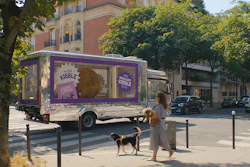
Some of that is already happening. Ben & Jerry's Doggie Desserts appears in the same freezer aisle as human ice cream — a small retail decision with surprisingly big implications. It subtly reframes pets as active participants in family indulgence occasions rather than a separate category entirely.
Expect more crossover moments ahead: more seasonal merchandising, more pet-inclusive travel experiences and more "something special for the dog" impulse purchases beside traditional family-focused promotions.
Meanwhile, adjacent industries are rapidly reshaping themselves around pet ownership. Pet supplements continue booming as consumers import preventative wellness habits from their own lives into pet care. Brands like Zesty Paws have helped transform stressful pill routines into flavored chews and liquids pets and owners actually look forward to.
Grooming has evolved from occasional maintenance into a premium wellness and convenience category. Mobile grooming, subscription services, skin-health positioning and salon-grade formulations increasingly resemble the evolution of human beauty and self-care.
Pet insurance is following a similar trajectory, driven by rising veterinary costs and younger consumers prioritizing long-term financial planning around pet health. Travel and hospitality are changing too. Hotels are no longer merely pet tolerant. Increasingly, they're pet accommodating — sometimes even pet obsessed. Luxury hospitality brands now offer dedicated pet menus, bedding, concierge services and curated experiences that would have sounded absurd 15 years ago.
Today, they sound smart. Because the cultural role of pets has fundamentally changed.
Not because animals became more human, but because people redefined what family, comfort, care and companionship look like in modern life. And the brands that understand that shift — without leaning on tired clichés or treating consumers like caricatures — will shape the future of the category.
As a partner at CBX, Satoru Wakeshima has a career spanning over 30 years in brand consulting. He has spearheaded strategy, creative, innovation and transformative campaigns for global brands, including M&M’s, Canada Dry, Clorox, Moët & Chandon, Gillette, Coca-Cola, Hershey’s, Milk-Bone and more.
Jessica Scholl, design director, The J.M Smucker Co., has nearly two decades delivering strategic and creative CPG solutions to clients across nearly every category of the store. Today, she leads packaging artwork design and production for the Pet Portfolio at The J.M. Smucker Company. In her leadership role, she has been championing design excellence with a targeted focus on the ever-evolving consumer, the pet parent.
 When trusted human-food brands cross into pet treats — like Milk-Bone made with Jif peanut butter — the product feels premium before the bag is even opened.The J.M. Smucker Company
 Pet food packaging now reads like human CPG: matte finishes, minimalist type, ingredient-forward shots, and wellness claims in earth-toned palettes. Purposeful simplicity is the new shelf standard.The J.M. Smucker Company
 Pet food packaging now reads like human CPG: matte finishes, minimalist type, ingredient-forward shots, and wellness claims in earth-toned palettes. Purposeful simplicity is the new shelf standard.The J.M. Smucker Company